
Buying a property in the Canary Islands has always felt like a dream investment. For years, the formula was simple: find a nice villa, ensure it has a Vivienda Vacacional (VV) license, and start welcoming guests. However, the legal landscape has shifted dramatically under the new Ley 6/2025. If you are currently browsing property portals and eyeing up homes marketed as "including a VV license," you need to stop and read this immediately.
The rules have changed. In 2026, a VV license is no longer a permanent fixture of the property that passes from seller to buyer like a set of keys. It is now a personal authorization tied to both the owner and the property: and that change has massive implications for your investment.
The Myth of the "Transferable" VV License
For a long time, estate agents have used the existence of a VV license as a major selling point. They often argue that because the property is already registered, you are "buying a business" and can simply carry on where the previous owner left off. Under the current Canary Islands legislation, this is simply not true.
Understand that the license is non-transferable. When a property is sold, the license does not automatically move to the new owner. Instead, the act of selling the property effectively renders the existing license void. The seller is legally required to cancel their license upon the transfer of the property, and the new owner must apply for a completely new one under the current (and much stricter) regulations.
Do not pay a premium for a "licensed" property. In the eyes of the law, as soon as you sign that deed at the Notary, the property has zero licenses. You are starting from scratch, and in many parts of the islands, starting from scratch is now almost impossible.
The 10% Quota Wall: A Reality Check
The centerpiece of the 2025 decree is a strict cap on the density of holiday rentals. The law mandates that at least 90% of residential stock in any given municipality must remain for residential use. This means that tourist rentals are capped at a maximum of 10%.
While this sounds reasonable on paper, the reality on the ground in popular tourist hubs is staggering. Several municipalities are already well beyond this limit: meaning the door for new licenses is effectively slammed shut.
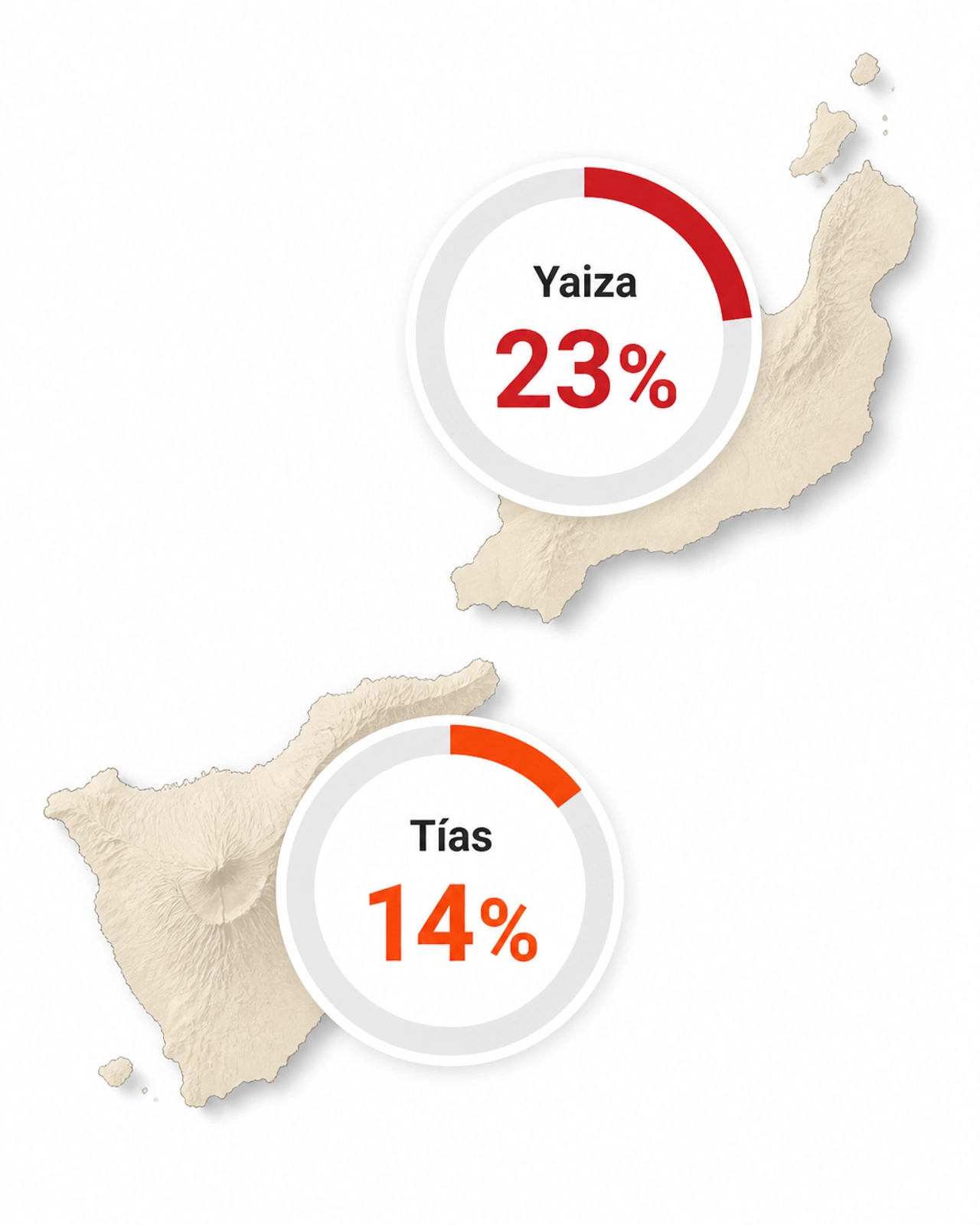
- Yaiza (Lanzarote): This municipality, which includes the popular resort of Playa Blanca, currently sits at approximately 23% holiday rental density. This is more than double the allowed quota.
- Tias (Lanzarote): Home to Puerto del Carmen, this area is at 14%, also comfortably over the limit.
- Tenerife Municipalities: Several key areas in the south of Tenerife are also reporting figures way beyond the 10% threshold.
If you buy a property in Yaiza today, you cannot "take over" the seller's license. You must apply for a new one. But because Yaiza is at 23%, the local authorities are legally barred from issuing new licenses until that number drops below 10%. Unless there is a radical change in government policy, you could be left with a property that you can only use for long-term rentals (90+ days) or your own personal use.
The 10-Year Moratorium for New Builds
If you were thinking of bypassing the quota issues by buying a brand-new development, think again. The decree includes a specific clause designed to protect the local housing market from immediate tourist exploitation.
Wait 10 years before applying. Any new build property completed after the implementation of the law is prohibited from applying for a VV license for a period of 10 years. This is a "cool-off" period intended to ensure that new housing is utilized by residents before it can even be considered for the holiday market.

This rule is a deal-breaker for many investors. If you are buying an off-plan apartment with the intention of using Airbnb or Booking.com to cover the mortgage, you are looking at a decade-long wait before that becomes a legal possibility.
Why This is a "Canaries Only" Problem
It is important to note that these specific restrictions: the 10% cap and the non-transferable nature of the license: are unique to the Canary Islands. If you have owned property in Alicante or the Costa del Sol, you might be used to different regional rules.
Spain manages holiday rental laws at the regional level. The Canary Islands government has taken one of the most aggressive stances in the country to combat the housing crisis. Do not let experiences in other parts of Spain cloud your judgment here. The "Canary Islands Law 6/2025" is a distinct legal framework that requires local expertise to navigate.
The Seller's Responsibility: Canceling the License
If you are currently selling a property in the Canary Islands, you have a legal obligation to "clean up" your administrative footprint. Leaving a license active in your name on a property you no longer own can lead to significant administrative headaches and potential fines.
Cancel your VV license promptly. Once the sale is finalized, you must inform the tourism board and cancel your activity. This process is not always straightforward and requires a formal submission through the government's digital portal.

To process this cancellation (and for the new owner to attempt any new registrations), a Digital Certificate is mandatory. This is a secure digital ID that allows you to sign documents and submit applications to the Spanish authorities.
At Villa Check In, we specialize in managing these transitions. We can assist owners in canceling their VV licenses remotely. We are an approved digital certificate authority, which means we can issue your certificate without you needing to fly over for an in-person appointment at a government office. Learn more about what is a digital certificate and how it protects your legal standing.
Don't Trust the "It's Fine" Advice
Estate agents are motivated to close the deal. When you ask about the VV license, they may say, "It's fine, it already has one." While the property might physically have a sticker on the door and a number in the registry, that number belongs to the current owner.
Verify the numbers yourself. Ask for the "Declaración Responsable" and check the municipality's current quota status. If the area is over 10%, that license is a "dead man walking": it exists today but will vanish the moment you buy the house.
If you find yourself in a situation where you cannot obtain a VV license, your options are limited:
- Long-term rentals: You can rent the property for periods of 90 days or more under the standard Urban Leasing Law (LAU).
- Personal use: You keep the property for yourself and friends/family. Remember, if friends stay while you aren't there, you still need to handle guest registration even if they aren't paying!
- Wait for policy change: You hold the property and hope for a future amendment to the law.
How Villa Check In Can Help
Navigating the 2026 legal landscape requires more than just a lawyer; it requires a compliance partner who understands the digital systems of the Canary Islands. We provide a bridge between property owners and the Spanish authorities, ensuring that every step of your journey: from initial registration to guest management: is fully compliant.

We offer:
- Remote Digital Certificate Issuance: Get your legal ID without leaving your home.
- License Cancellation Services: We handle the paperwork for sellers to ensure a clean exit.
- Compliance Audits: We can review a potential purchase to tell you honestly if a VV license is a realistic possibility.
- Automated Guest Registration: Once you are up and running, we handle the mandatory reporting to SES Hospedajes.
Summary: Act with Caution
The Canary Islands remain a beautiful place to invest, but the "Golden Age" of easy VV licenses is over. The new 10% quota and the non-transferable nature of licenses mean that the "value" of a licensed property is often an illusion for a new buyer.
Gather your facts, consult the quotas, and ensure you have a Digital Certificate ready. Do not be pressured into a purchase based on outdated information. The 2026 laws are here to stay, and compliance is the only way to protect your investment.
If you are unsure about the status of a property or need help managing your current licenses, contact us today for a consultation. We can help you navigate the complexities of Ley 6/2025 and ensure you stay on the right side of the law.