

If you own or manage a holiday rental in Spain, you already know the administrative burden is heavy. You likely understand that guest registration is mandatory — a rule that has been in place for decades. However, a dangerous misconception is circulating among property owners, one that could lead to financial ruin.
Most owners believe their legal obligation begins the moment a guest walks through the front door. They assume that as long as they register the travellers on the day of arrival, they are compliant. This is a myth. Under Royal Decree 933/2021, the clock starts ticking much earlier than check-in day.
Failing to understand the distinction between booking data and guest data is the "SES Hospedajes Trap." If you wait until the guest arrives to engage with the Ministry of the Interior, you may have already committed a serious infraction — potentially triggering fines ranging from €601 to €30,000.
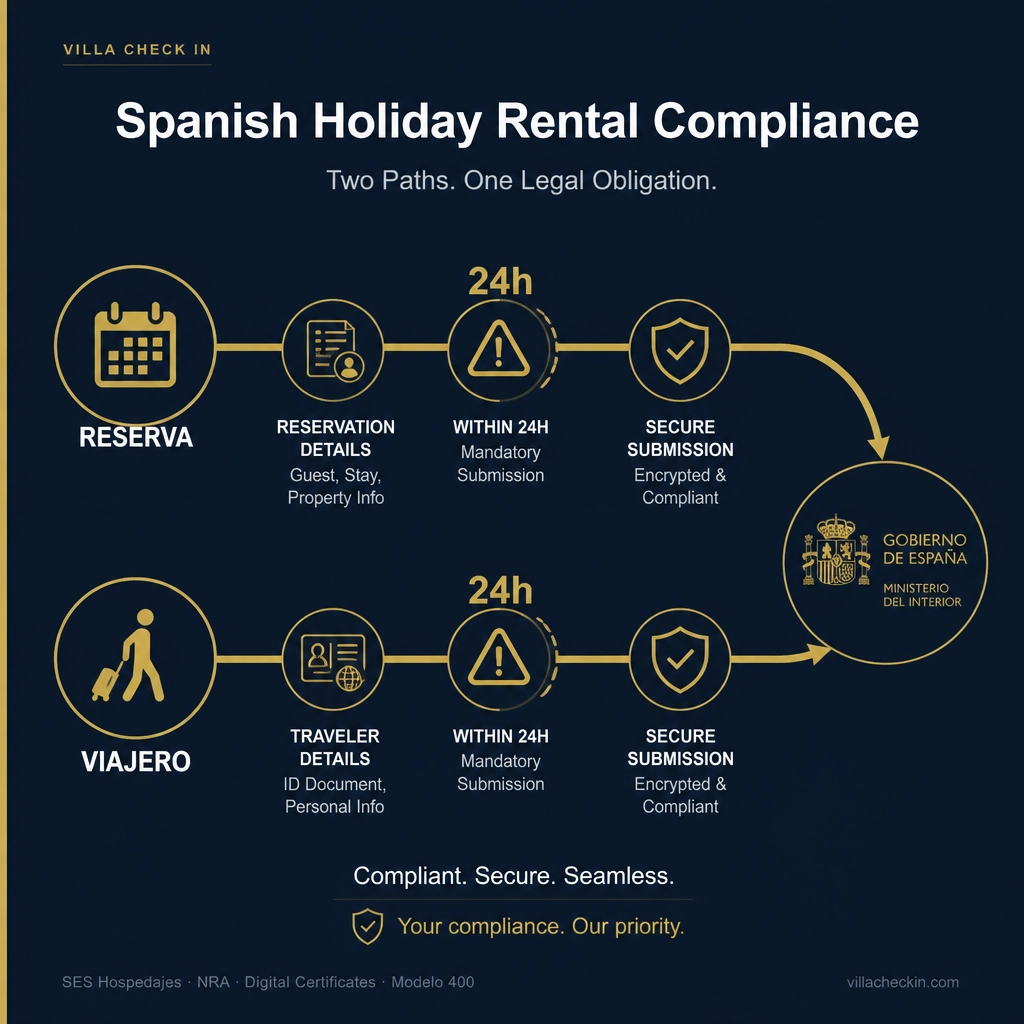
The Two Distinct Pillars of RD 933/2021
The Spanish government has split your reporting obligations into two separate events. To stay compliant, you must master the vocabulary and the timing of both.
1. Comunicación de Datos de Reservas (Booking Data)
This is the "pre-arrival" phase. The law requires you to report the details of the transaction itself — the reservation reference, the date the contract was made, the planned dates of the stay, and the payment details.
The critical detail is the timeline. You must submit this data within 24 hours of the booking being confirmed. If a guest books your villa on a Monday morning for a stay six months away, the Spanish authorities expect to hear about it by Tuesday morning. Waiting until the guest is on the plane is too late.
2. Comunicación de Datos de Viajeros (Guest Data)
This is the "on-arrival" phase. This involves reporting the identity details of every person staying at the property — names, passport numbers, birth dates, and nationalities.
Just like the booking data, this must also be submitted within 24 hours, but the trigger is the "inicio de los servicios" — the start of the stay.
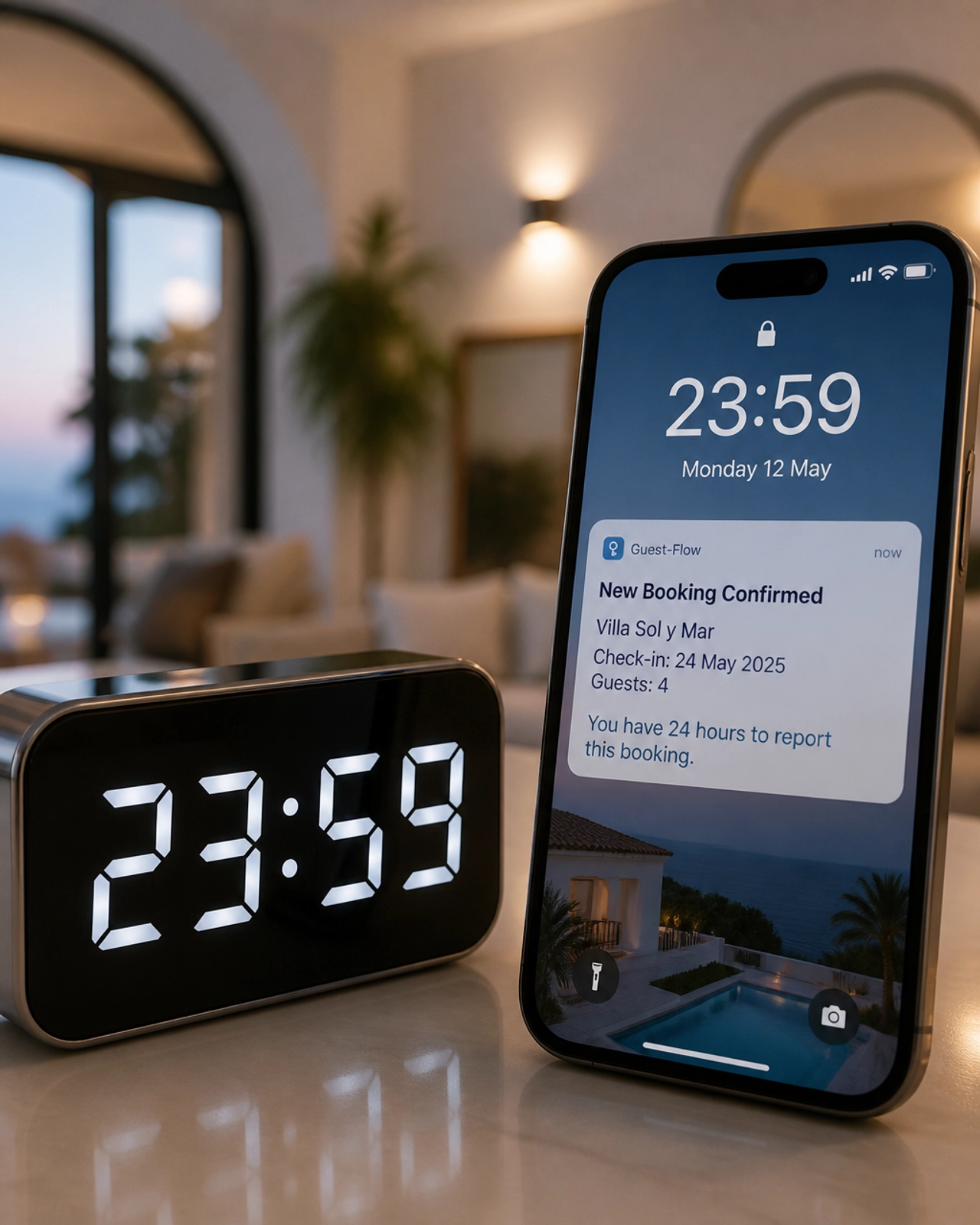
The Booking Deadline: A 24-Hour Race You Didn't Know You Were Running
The most overlooked aspect of the SES Hospedajes platform is the reporting of the booking — the comunicación de datos de reservas. Many owners feel they can "get around to it" a few weeks before the guest arrives. In reality, the Ministry of the Interior views a delayed booking report as a breach of security protocols.
Why is the government so strict? The system is designed to provide real-time visibility into who is planning to travel within Spain and where they are staying. By the time a guest arrives, the authorities should already have a record of that booking in their system.
The Responsibility Gap:
- OTA Bookings: If a booking comes through Booking.com or Airbnb, the platform is generally responsible for communicating the booking data. However, you remain responsible for the guest data at check-in.
- Direct Bookings: If a guest books via your own website, WhatsApp, or over the phone, you are solely responsible for reporting both the booking and the guests.
If you take a direct booking and fail to report the transaction within 24 hours, you are technically in violation. In a world of automated government cross-referencing, these gaps are becoming easier for authorities to spot.
Understanding the Financial Stakes — €600 to €30,000
The Spanish authorities do not take reporting delays lightly. Penalties are structured into tiers based on the severity and frequency of the infraction.
Minor Infractions (€100–€600)
Typically issued for administrative errors:
- Late submissions — sending data 48 hours after the deadline instead of 24
- Incomplete data — a missing mandatory field or incorrect document type
- Typographical errors — small mistakes that don't suggest a deliberate attempt to conceal information
Serious Infractions (€601–€30,000)
This is where the trap becomes truly dangerous. These fines are reserved for:
- Total omission — not reporting the booking or the guests at all
- Systemic failure — a consistent pattern of late or missing registrations
- Operating without registration — attempting to run a holiday rental without being properly registered on SES Hospedajes
For a small property owner, a €30,000 fine is not a "cost of doing business" — it is a business-ending event. Authorities now use automated tools to compare booking calendars against reported stays, so the risk of flying under the radar has effectively disappeared.
The Operational Nightmare: Why Manual Entry Fails
Consider the manual workload required to stay compliant without help. For every single booking, you must:
- Log into the SES Hospedajes portal within 24 hours of booking confirmation to enter transaction details
- Chase the guest for their ID photos and signatures weeks before they arrive
- Review those IDs for clarity and accuracy
- Log back into the portal within 24 hours of arrival to upload the traveller details
If you manage three properties with ten bookings a month, that is 40 distinct interactions with a government portal that is notoriously unreliable. If you miss just one 24-hour window — because you were at dinner, asleep, or travelling — you have stepped into the trap.
Accessing the portal also requires a Spanish Digital Certificate, a piece of software that must be installed on your computer and used alongside "Autofirma." This is not a simple email-and-password login — it is a high-security environment that frequently times out or rejects valid data.
Escape the Trap with Automation
The only way to guarantee compliance — and protect your bank account from five-figure fines — is to remove the human element. You should not be responsible for watching the clock; a system should do it for you.
At Villa Check In, our guest registration service is built specifically to handle both the comunicación de datos de reservas and the comunicación de datos de viajeros.
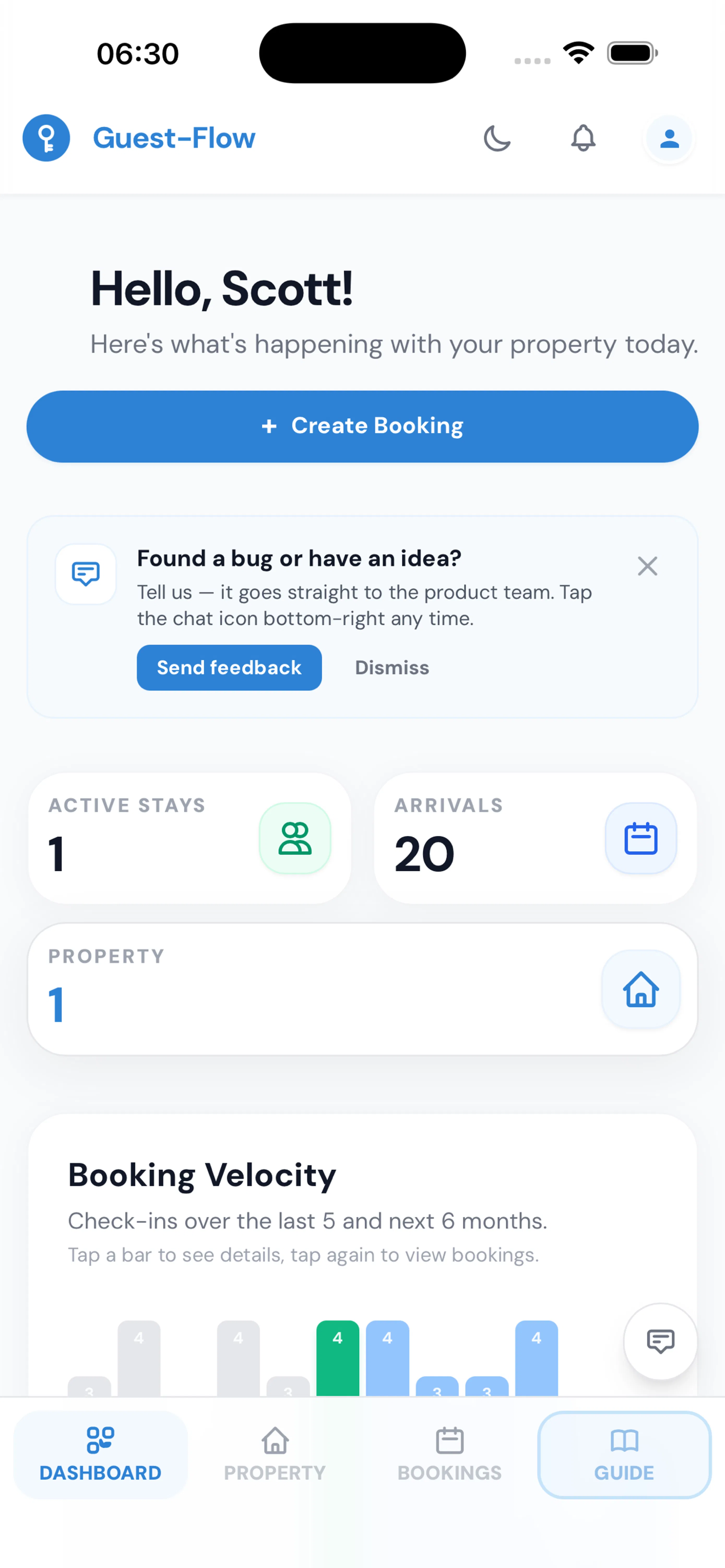
When you use a managed service, the process becomes invisible to you:
- Immediate reporting — our system syncs with your PMS (Smoobu, Lodgify, etc.) to report booking data the second it is confirmed
- Guest self-registration — your guests receive a secure link to upload their own data and digital signatures
- Expert review — our team checks the data for errors before it reaches the government servers, preventing minor infraction fines for typos
- Direct API submission — we bypass the manual portal, submitting data directly to the Ministry of the Interior via a secure digital bridge
Stop Gambling with Your Rental Licence
The era of casual property management in Spain is over. The government is moving toward a highly digitised, high-enforcement model. The distinction between booking data and guest data is not a technicality — it is a legal requirement with a massive price tag attached.
Don't wait until you receive a notification from the authorities. Every day you manage your bookings manually is a day you risk a €30,000 oversight.

Ready to secure your property? View our pricing or contact our team today to bridge the gap between your bookings and total compliance.