Mainland Spain in October often feels like the morning after a very loud, very successful party. The summer crowds have vanished — taking their inflatable flamingos with them — and the sun begins its slow, dignified retreat. For many holiday rental owners, this transition marks the start of the "Great Hibernation."
However, leaving your property empty from October to March is a missed opportunity. While the casual beach-goer may be gone, a sophisticated wave of off-season travelers is looking for exactly what you have — provided you know how to pitch it. Transforming your villa from a summer splash-pad into a winter sanctuary requires a shift in strategy, a few cozy blankets, and a rock-solid grasp of off-season logistics.
Target the Digital Nomad Goldmine
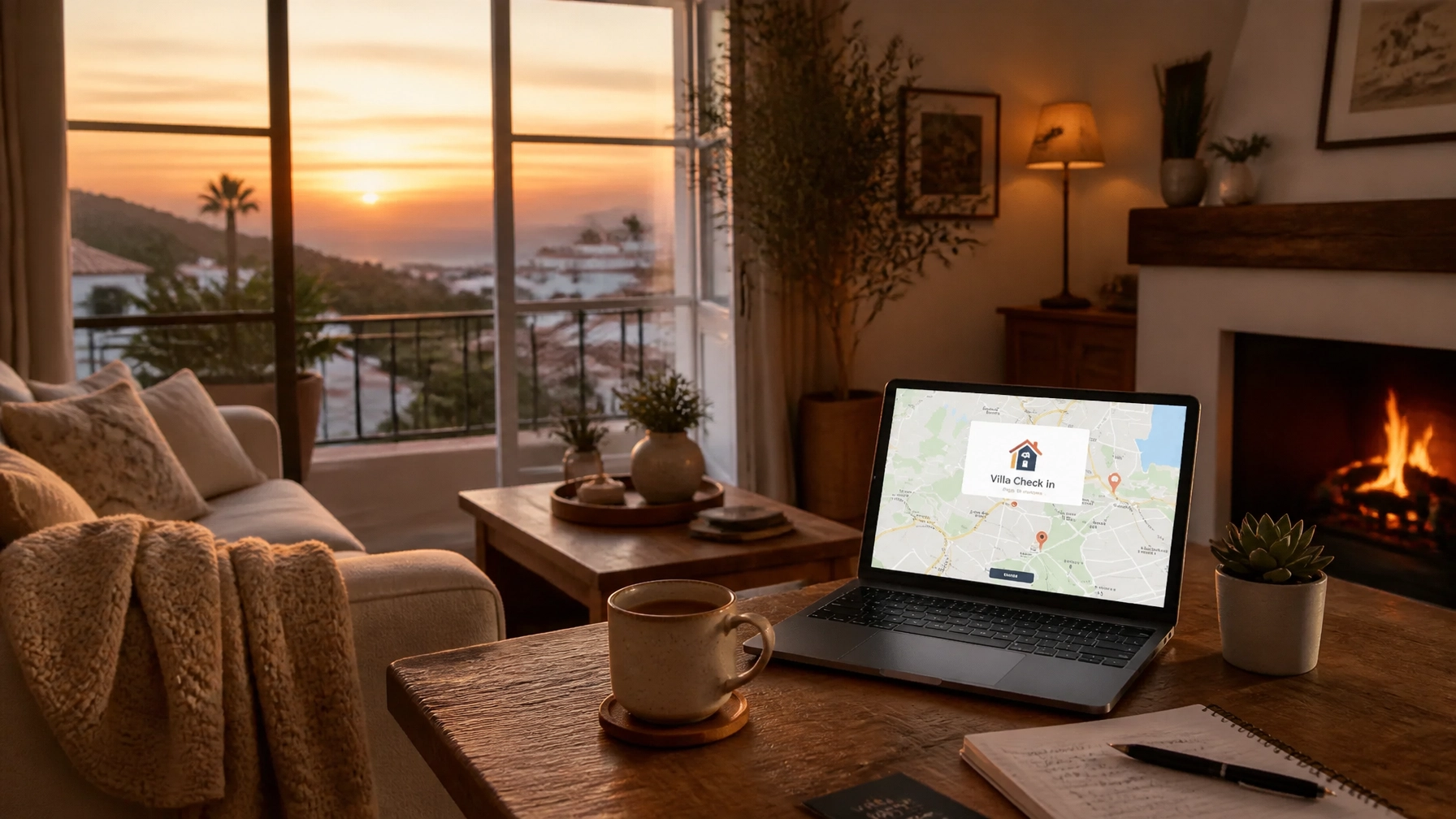
The rise of the "workation" is the best thing to happen to mainland Spain since the invention of gazpacho. Digital nomads — those laptop-wielding professionals who can work from anywhere with a signal — actively seek out Mediterranean bases during the northern winter. They aren't looking for a week of tan-lines; they want a month of productivity with a side of tapas.
To attract this demographic, you must prioritize their primary tool: the internet. Gather speed test results and post a screenshot in your listing photos — nomads won't trust a "high-speed Wi-Fi" claim without proof. Ensure your property has a dedicated workspace. A kitchen table is fine for a sandwich, but a nomad needs an ergonomic chair and a desk with a view to stay for six weeks.
Create a Sanctuary for 'Snowbirds'
While nomads are chasing the Wi-Fi, "Snowbirds" — retirees from Northern Europe and the UK — are chasing the light. These guests typically stay for two to four months to escape the damp, grey winters of the north. Their priorities are comfort, accessibility, and community.
Focus on the "liveability" of your property. Ensure your heating systems are serviced and efficient — Spanish tiles are beautiful in July but can feel like an ice rink in January. Highlighting amenities like a Smart TV with international channels or a selection of books can make a long stay feel more like home. Mentioning the proximity to local pharmacies, grocery stores, and social clubs is also a major selling point for this demographic, as they value a gentle, well-connected lifestyle.
Pivot to Niche Activities
Mainland Spain is actually more enjoyable for many outdoor activities when the mercury isn't hitting 40°C. Use the cooler months to market your property as a base for specific hobbies that thrive in the mild winter air.
- Golfing: Many of the world's best courses are on the mainland, and winter is peak season for enthusiasts who find the summer heat unbearable.
- Hiking and Cycling: The Sierra Nevada and coastal trails are spectacular in the autumn and winter. Promote these routes in your listing description.
- Gastronomy: Winter is the season of hearty stews, olive harvests, and wine festivals. Position your villa as a "gastronomic retreat" near local vineyards or markets.
By tailoring your marketing to these specific interests, you move your property out of the general "holiday let" category and into a specialized "activity hub."
Offer the '30-Day Sweet Spot'
One of the most effective ways to maintain occupancy is to stop chasing short-term bookings and start embracing mid-term stays. October to March is the perfect time to offer deep discounts for stays of 30 days or longer.
These guests are lower maintenance — they generate fewer check-ins, less laundry, and more stable revenue. When calculating your off-season rates, consider the "All Bills Included" model. Snowbirds and nomads prefer the simplicity of one fixed price rather than worrying about the fluctuating cost of Spanish electricity. Providing a clear, all-inclusive monthly rate removes the friction from their decision-making process.
Understand the Regional Duration Rules
Before you market a stay as "short-term" or "mid-term," check the local rulebook. Spain does not use one universal definition across every region, which is a wonderfully efficient way to keep owners alert and slightly over-caffeinated.
In the Valencian Community, any booking over 10 consecutive days per guest is legally not a tourist rental. Once you cross that line, the stay must be managed as a seasonal rental — arrendamiento de temporada — under the LAU. In practical terms, that can mean your Airbnb listing is effectively capped at 10 days if you are operating under a tourist-rental licence, and you may need different platforms, different contracts, or a different booking workflow for mid-term winter guests.
In Andalusia, the tourist-rental decree excludes stays of more than two continuous months with the same guest. Anything shorter is generally treated as a tourist rental — a VFT booking — so a one-month winter stay still sits under your VFT licence and its obligations. Stays of more than two months can be structured as a seasonal rental instead, which makes the classic snowbird season a useful off-season strategy, provided you set it up correctly.
In the Canary Islands, the law presumes tourist use — Vivienda Vacacional — whenever a stay is 31 days or less, or whenever the property is advertised on a tourist channel. A longer stay can be a seasonal rental — arrendamiento de temporada — under the LAU, but only if the contract documents the temporary reason for the stay, such as work, study or medical treatment. Without that, the let is treated as tourist accommodation, whatever its length.
This matters because your pricing, guest type, marketing, and compliance setup may need to change depending on the stay length and the region where your property sits. A 28-day booking in Málaga or Tenerife still falls inside the tourist-rental framework. In Valencia, that same booking would push you straight into LAU territory.
Use this as a planning checkpoint:
- Check your regional rules: Confirm how your autonomous community defines tourist stays before publishing monthly winter offers.
- Adjust your booking strategy: Use tourist-rental platforms for shorter stays and switch to suitable contracts or channels when a booking becomes a seasonal rental.
- Plan for Valencia carefully: Keep tourist-rental listings within the 10-day limit and build a separate process for longer winter guests.
- Document seasonal lets properly: In the Canaries especially, record the temporary reason for the stay in the contract and keep seasonal offers off tourist channels.
- Don't drop guest reporting by default: Spain's Interior Ministry takes the view that seasonal lets must still report guests through SES Hospedajes. Until that is settled, keep reporting and check your position with your adviser.
Enhance Your Winter Amenities
A few tactical upgrades can dramatically change how your property is perceived in the off-season. You aren't just selling a place to sleep; you're selling a "cozy experience."
- Heating: If you don't have central heating, invest in high-quality inverter air conditioning units or stylish electric radiators.
- Textiles: Swap out thin summer sheets for high-tog duvets, wool throws, and thick rugs to add warmth and visual "hygge."
- Entertainment: Ensure your Smart TV is ready for streaming. A Netflix-ready setup is a non-negotiable for a guest staying for a month in February.
- Lighting: As the days get shorter, warm, layered lighting (floor lamps and table lamps) becomes more important than bright overhead lights.
Keep Compliance on Your Radar
Match your compliance process to the type of stay you are offering. In Spain, tourist rentals and other genuine short-term holiday stays must report guest details through SES Hospedajes. If you continue taking winter bookings on a short-term basis, keep that reporting workflow in place to avoid fines and last-minute admin.
Switching the property to a properly structured seasonal rental — arrendamiento de temporada — under a valid LAU contract changes your licence position and your contract paperwork, but don't assume it ends guest reporting. The Interior Ministry's SES Hospedajes team has stated that seasonal lets are still covered, although some lawyers argue the regulation only applies to tourist accommodation. Until that is settled, the safe course is to keep submitting guest details and to check your position with your adviser.
Use the right setup for the right booking. An automated Guest Registration process keeps reporting quick for short and long stays alike, and a Digital Certificate lets you complete submissions electronically and efficiently.

Summary: From Empty to Occupied
Filling your mainland Spain property during the winter isn't about luck; it's about adaptation. By targeting digital nomads with fast Wi-Fi, welcoming snowbirds with cozy amenities, and marketing to niche hobbyists, you can turn the quiet months into a period of steady, reliable income.
Ensure your pricing reflects the value of mid-term stays and keep your administrative house in order. With a proactive strategy, the off-season doesn't have to be a ghost town — it can be your property's most profitable "secret" season.